
A Small Letter, A Big Message: A Student’s Call for a Cleaner Society
Sometimes, real change does not begin in government offices or big conferences. It begins in classrooms. It begins with children.
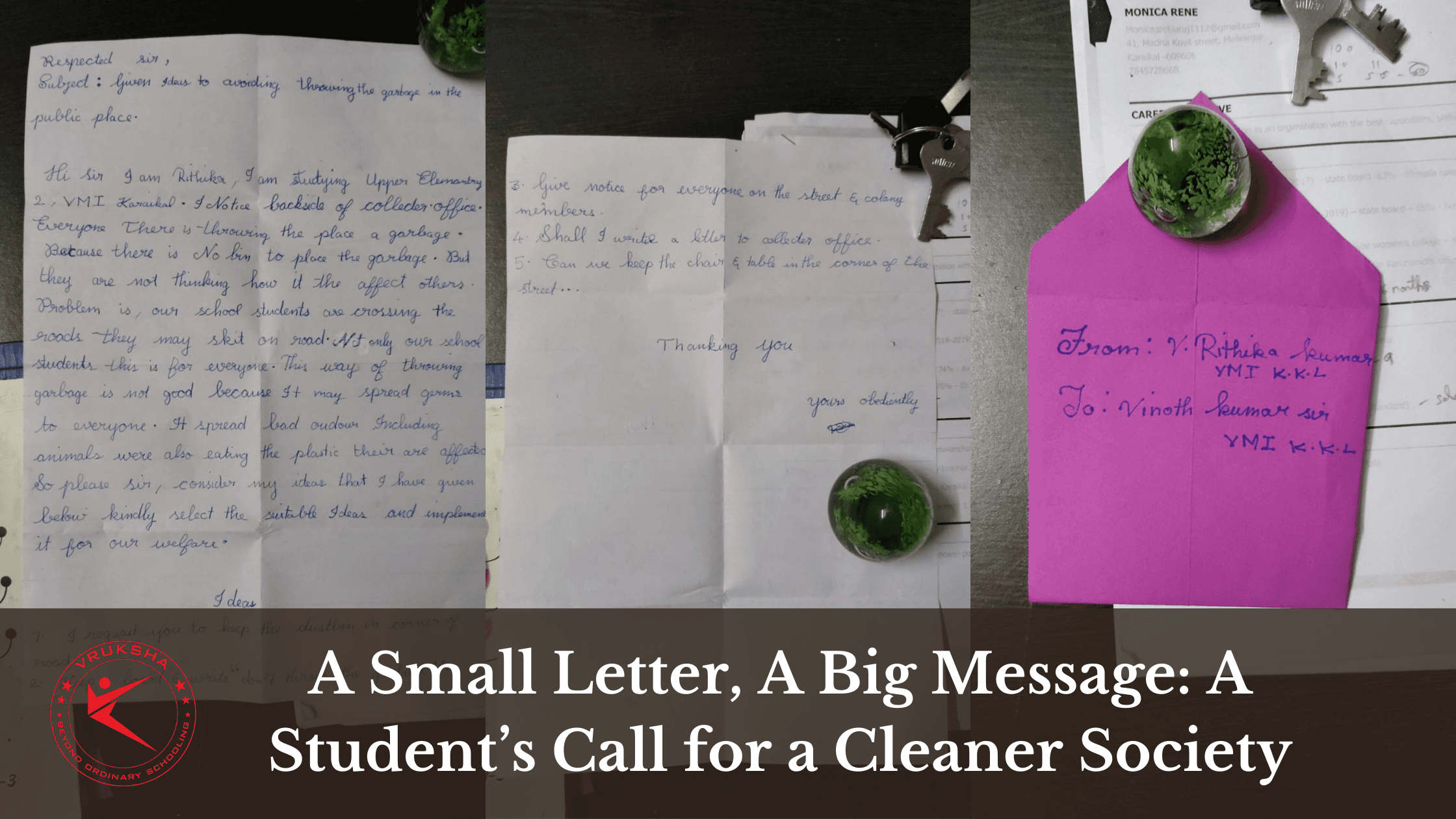
A young student named Rithika, 11 years old, from VMI Karaikal, wrote a heartfelt letter to her school authority about a serious issue in her area: people throwing garbage in a public place near the collector's office.
Her words were simple. But her concern was powerful.
The Problem She Noticed
Behind the collector's office, people were carelessly throwing garbage. There were no proper dustbins placed in that area. Because of this, the place slowly turned into an open dumping spot.
Rithika noticed something many adults ignored:
School students cross that road daily.
Garbage on the road can cause accidents.
It may spread germs and diseases.
Animals eat plastic and get affected.
What many people considered a “small issue,” she understood as a public health and safety problem.
Why Public Cleanliness Matters
Throwing garbage in public places is not just about untidiness. It leads to:
1. Health Risks
Garbage attracts flies, mosquitoes, and stray animals. It spreads infections and diseases in the surrounding area.
2. Road Safety Problems
Students and pedestrians may slip or fall. Especially during rainy seasons, garbage mixed with water becomes dangerous.
3. Environmental Damage
Plastic waste harms animals. It pollutes soil and water. Once plastic enters the ecosystem, it takes years to decompose.
4. Bad Example for Children
When children see elders littering, they may think it is normal behavior.
Clean surroundings reflect responsible citizens.
A Student’s Practical Solutions
What makes this letter special is not just the complaint but the solutions suggested.
Rithika did not blame anyone. Instead, she gave clear and practical ideas:
Keep dustbins at the corner of the road.
Put up a notice board saying, “Don’t throw garbage.”
Give notice to the street and colony members.
Write a letter to the collector's office.
Take steps to monitor the area.
These are simple actions. Yet, if implemented, they can completely change the situation.
The Power of Civic Responsibility
This letter reminds us of something important:
Civic responsibility does not depend on age.
A young student understood:
Community problems need community solutions.
Awareness is the first step toward change.
Speaking up is better than staying silent.
If every citizen takes small responsibility keeping surroundings clean, using dustbins, spreading awareness cities can become healthier places to live.
What Adults Can Learn From This
Often, children are taught values in school:
Cleanliness
Discipline
Respect for nature
But are adults setting the right example?
When a child writes a letter requesting cleanliness, it shows that moral education is working. Now it is society’s responsibility to respond.
Building a Cleaner Future Together
Clean India is not just a slogan. It is a shared duty.
To avoid garbage dumping in public places, authorities and citizens can:
Install proper waste bins.
Ensure regular garbage collection.
Create awareness campaigns.
Impose fines for littering.
Encourage community monitoring.
Small initiatives create long-term impact.
Conclusion
This letter is not just about garbage. It is about awareness. It is about courage. It is about a young mind thinking beyond herself.
Real change begins when someone notices a problem and decides to act.
If one student can take responsibility, imagine what an entire community can do.
Let us not wait for someone else to clean our streets. Let us begin with ourselves.
Because sometimes, the strongest voice for change comes from the smallest hands.