
How Montessori Education Improves Child Behaviour
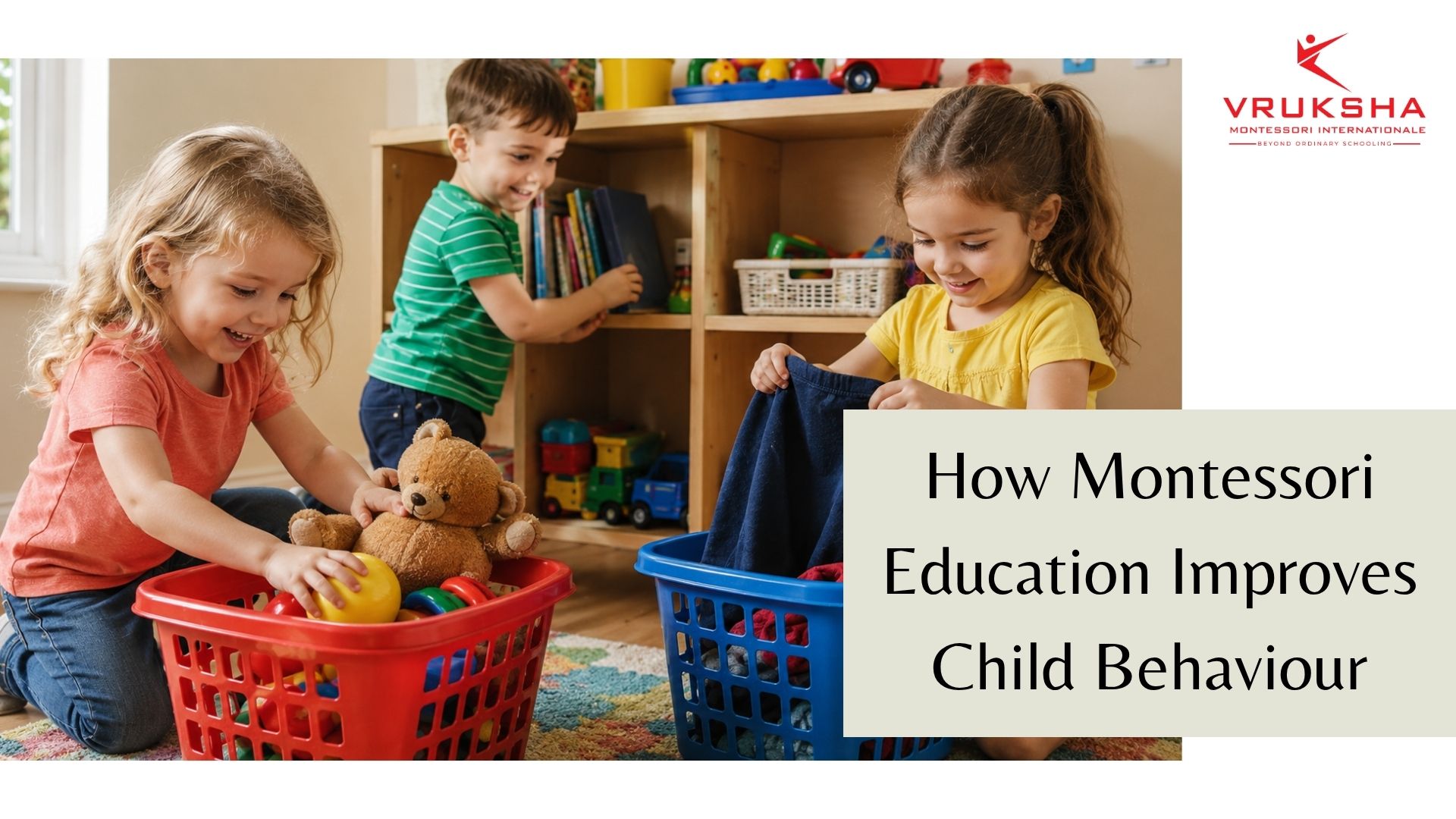
Parents today are increasingly concerned about their child’s behavior, attention span, emotional balance, and independence. Many children struggle with frustration, dependency, poor focus, emotional outbursts, or lack of responsibility not because they are incapable, but because traditional learning environments often fail to support natural child development.
This is where Montessori education creates a meaningful difference.
Rather than controlling children through pressure or fear, Montessori learning encourages self-discipline, emotional understanding, independence, and responsible behavior. It focuses on helping children grow naturally in an environment designed around respect, curiosity, and calm guidance.
In recent years, more parents have started recognizing that good behavior is not created through punishment alone. True behavioral development happens when children feel emotionally secure, understood, and trusted.
Understanding Child Behaviour
Child behavior is deeply connected to emotional development and environment. Children are constantly learning how to:
communicate emotions,
manage frustration,
interact with others,
solve problems,
and respond to challenges.
When children are constantly pressured, compared, or forced into rigid systems, they may become fearful, emotionally reactive, or dependent on external control.
On the other hand, when children are given structured freedom, respectful guidance, and opportunities to think independently, they naturally begin developing better behavioral patterns.
This is one of the strongest foundations of Montessori education.
How Montessori Education Encourages Positive Behaviour
1. Builds Independence from an Early Age
One of the core principles of Montessori learning is helping children become independent.
Children are encouraged to:
organize their belongings,
complete tasks independently,
make simple decisions,
and manage daily routines responsibly.
When children learn to do things on their own, they develop confidence and self-control. Independent children often display calmer behavior because they do not constantly rely on adults for every small action.
Instead of hearing “Don’t do that” all day, Montessori children hear the following:
“Try it yourself.”
“You can do it.”
“Let’s learn together.”
This creates self-belief and emotional stability.
2. Reduces Fear-Based Behaviour
Traditional classrooms sometimes rely heavily on punishment, shouting, comparison, or pressure to maintain discipline.
While this may create temporary obedience, it often leads to:
fear,
anxiety,
emotional withdrawal,
or aggressive behavior.
Montessori education takes a different approach.
Children are guided calmly and respectfully. Teachers observe behavior carefully and help children understand consequences naturally rather than through fear.
This creates emotionally secure children who:
communicate better,
express feelings openly,
and develop internal discipline.
Behavior improves naturally when children feel emotionally safe.
3. Improves Focus and Concentration
Many parents worry that children today struggle to focus for long periods.
Montessori classrooms are carefully designed to encourage deep concentration. Children work on activities independently without constant interruptions.
Over time, this helps children:
improve patience,
develop attention control,
and stay engaged longer.
A child who can focus calmly is often better able to:
regulate emotions,
complete tasks,
and avoid impulsive behavior.
4. Encourages Respectful Communication
Respect is an important part of the Montessori environment.
Children learn to:
speak respectfully,
listen carefully,
wait for their turn,
and interact peacefully with others.
Teachers model calm communication rather than authority-based control.
Because children are treated respectfully, they gradually learn to treat others the same way.
This helps improve:
classroom behaviour,
social interactions,
sibling relationships,
and communication confidence.
5. Helps Children Manage Emotions Better
Young children often struggle to express emotions properly. Frustration may appear as anger, crying, stubbornness, or withdrawal.
In Montessori education, emotional development is considered just as important as academics.
Children are encouraged to:
identify feelings,
solve conflicts peacefully,
and develop emotional awareness.
Teachers observe emotional triggers instead of simply reacting to behavior.
This supportive environment helps children become
emotionally balanced,
more patient,
and more self-aware.
6. Promotes Responsibility and Self-Discipline
Montessori classrooms give children meaningful responsibilities.
Children may:
clean their workspace,
arrange materials,
help peers,
or complete tasks independently.
Responsibility teaches children that their actions matter.
Instead of depending entirely on adults for discipline, children begin developing self-discipline internally.
This is one of the biggest behavioral advantages of Montessori learning.
7. Reduces Comparison and Competition
Constant comparison can negatively affect behavior and confidence.
When children feel pressured to compete constantly, they may develop the following:
insecurity,
jealousy,
stress,
or fear of failure.
Montessori learning focuses on individual growth rather than comparison.
Each child progresses at their own pace.
This creates:
healthier confidence,
reduced emotional stress,
and a stronger love for learning.
Children become more cooperative instead of overly competitive.
8. Encourages Curiosity Instead of Pressure
Children naturally enjoy learning when curiosity is protected.
In many traditional systems, excessive pressure can make children associate learning with stress.
Montessori environments encourage:
exploration,
questioning,
hands-on learning,
and creativity.
Curious children are often more engaged, emotionally positive, and willing to participate actively.
Positive engagement naturally improves behavior.
Long-Term Behavioural Benefits of Montessori Education
Children raised in strong Montessori environments often become the following:
more confident,
emotionally secure,
responsible,
independent,
adaptable,
and socially aware.
They are more likely to:
solve problems independently,
communicate clearly,
handle challenges calmly,
and develop healthy learning habits.
Most importantly, they learn discipline through understanding rather than fear.
Why More Parents Are Choosing Montessori Education
Modern parents are beginning to realize that academic marks alone are not enough.
Children also need:
emotional strength,
communication skills,
adaptability,
confidence,
and independent thinking.
Montessori education supports the development of the whole child emotionally, socially, intellectually, and behaviorally.
This balanced approach helps children grow into capable and confident individuals who are prepared not only for school but for life itself.
Final Thoughts
Good behavior is not created through pressure or constant control. It develops when children feel respected, emotionally secure, and capable of managing themselves.
Montessori education creates an environment where children naturally learn responsibility, focus, emotional balance, and independence.
For parents looking beyond rote learning and fear-based systems, Montessori education offers a meaningful path toward raising emotionally healthy and confident children.
To learn more about child-focused learning and future-ready education, visit - VMI Schools