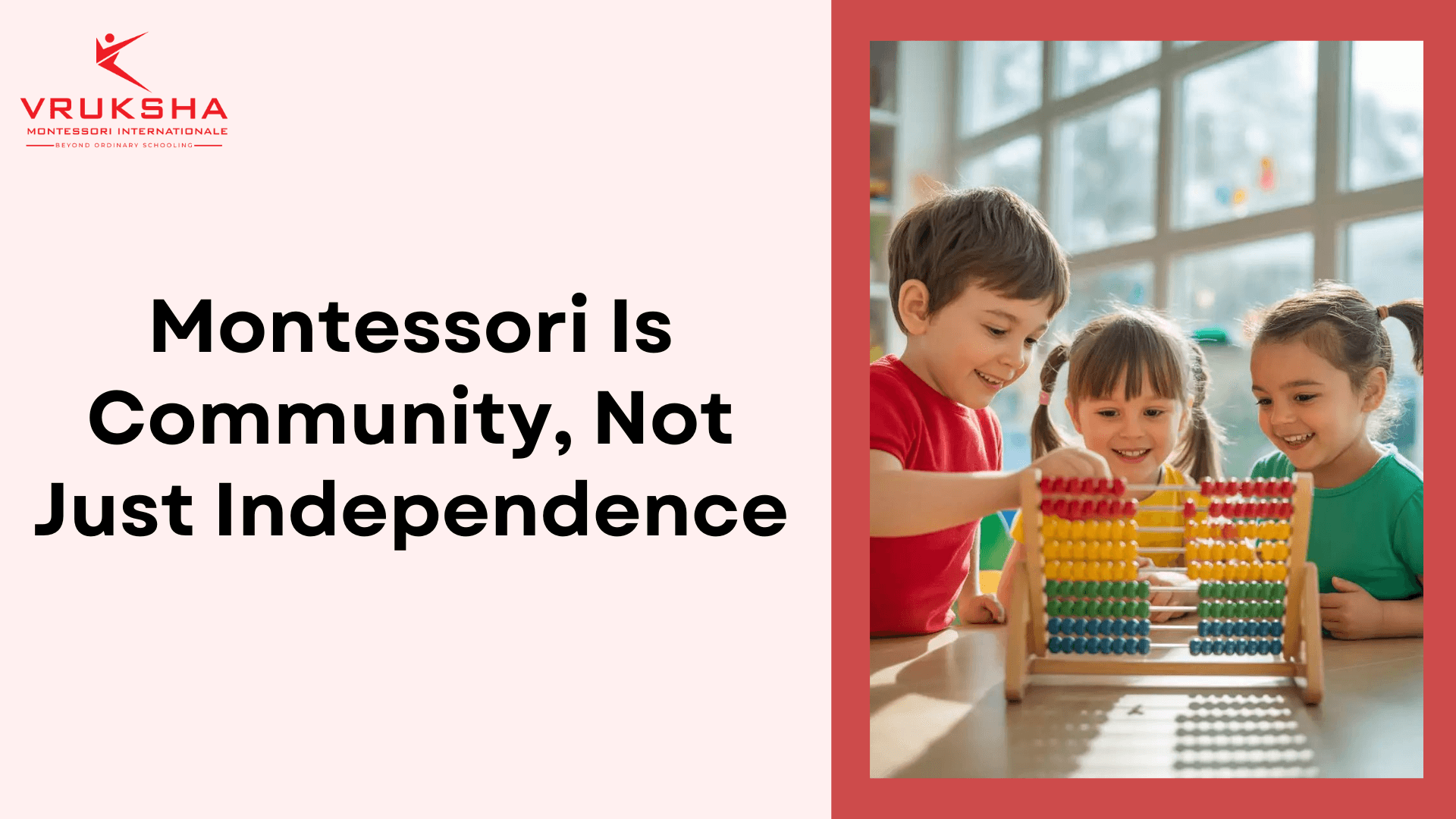
Montessori Is Community, Not Just Independence
When people first hear about Montessori education, the most common idea they associate with it is independence.
Yes, independence is an important part of the Montessori philosophy. Children are encouraged to learn how to dress themselves, prepare simple food, clean their workspace, and take responsibility for their environment.
However, Montessori education is not only about independence. It is also about something equally important; community.
At Vruksha Montessori Internationale School, we create an environment where children not only learn to do things on their own but also learn how to live, learn, and grow together as part of a community.
Montessori Builds a Community
Some people believe Montessori children always work alone and may not develop strong social skills.
But in reality, the Montessori classroom is a small community where children interact, observe each other, collaborate, and learn important social values every day.
Children learn how their actions affect others and how they can contribute to the group.
This sense of belonging helps them develop empathy, cooperation, and respect.
Learning Through Observation
In a Montessori classroom, children learn a lot simply by observing others.
Younger children often watch older children closely. They see how a friend carefully carries materials, returns activities to the shelf, or cleans up after finishing their work.
Through observation, they begin to imitate these behaviors and gradually develop the same habits.
Observation is one of the most powerful ways children learn in a Montessori environment.
Developing Social Skills Naturally
As children grow, they naturally begin interacting more with others.
In a Montessori classroom, children practice important social skills such as:
asking a friend to join an activity
learning to wait for their turn
expressing when they want to work alone
helping classmates when needed
These everyday moments become valuable opportunities for children to learn how to communicate and cooperate respectfully.
Sharing Responsibilities
Community also means working together and sharing responsibilities.
In Montessori classrooms, children participate in practical activities that benefit everyone.
They may:
prepare snacks for their friends
arrange flowers in the classroom
water plants
wipe tables
clean up spills
These activities help children understand that they are an important part of the classroom community.
They feel proud when they contribute and help others.
Caring for the Environment
Montessori children are encouraged to care for their environment.
You may see children happily cleaning a table, watering plants, or organizing materials on the shelf.
Sometimes they even clean up a spill before anyone asks.
Through these activities, children learn responsibility and respect for shared spaces.
They understand that the environment belongs to everyone.
Learning to Take Turns
One of the most valuable social skills children develop in Montessori classrooms is learning to take turns.
When a child chooses an activity, they are allowed to work with it for as long as they need.
Other children learn patience while waiting for their turn.
Teachers gently guide children to communicate respectfully when they want to use the same material.
This helps children learn problem-solving and cooperation.
Respectful Communication
In Montessori classrooms, adults model respectful language and behavior.
Children learn to say the following:
“Thank you."
“Excuse me."
“May I have a turn when you finish?”
They also learn to move carefully around others and respect their workspace.
By observing these behaviors, children naturally adopt respectful habits.
Growing Communities as Children Grow
A child’s community continues to expand as they grow.
Infants and toddlers first experience community through their family.
Young children begin interacting with classmates and teachers in preschool environments.
As children grow older, their community expands further to include school groups, neighborhood connections, and larger social environments.
Montessori education prepares children to participate confidently and responsibly in these communities.
The Montessori Community at Vruksha
At Vruksha Montessori Internationale School, we nurture both independence and collaboration.
Our classrooms are carefully designed environments where children can:
learn independently
observe and learn from peers
help one another
develop empathy and respect
contribute to their community
By combining independence with community, we help children develop not only academic skills but also social awareness and responsibility.
Final Thoughts
Montessori education is much more than teaching children to work independently.
It is about preparing them to live in a community where they respect others, contribute positively, and care for the world around them.
At Vruksha Montessori Internationale School, we believe that children thrive when they feel connected to a supportive community where they can learn, grow, and belong.