
Montessori vs CBSE: What Parents in Karaikal Are Not Being Told
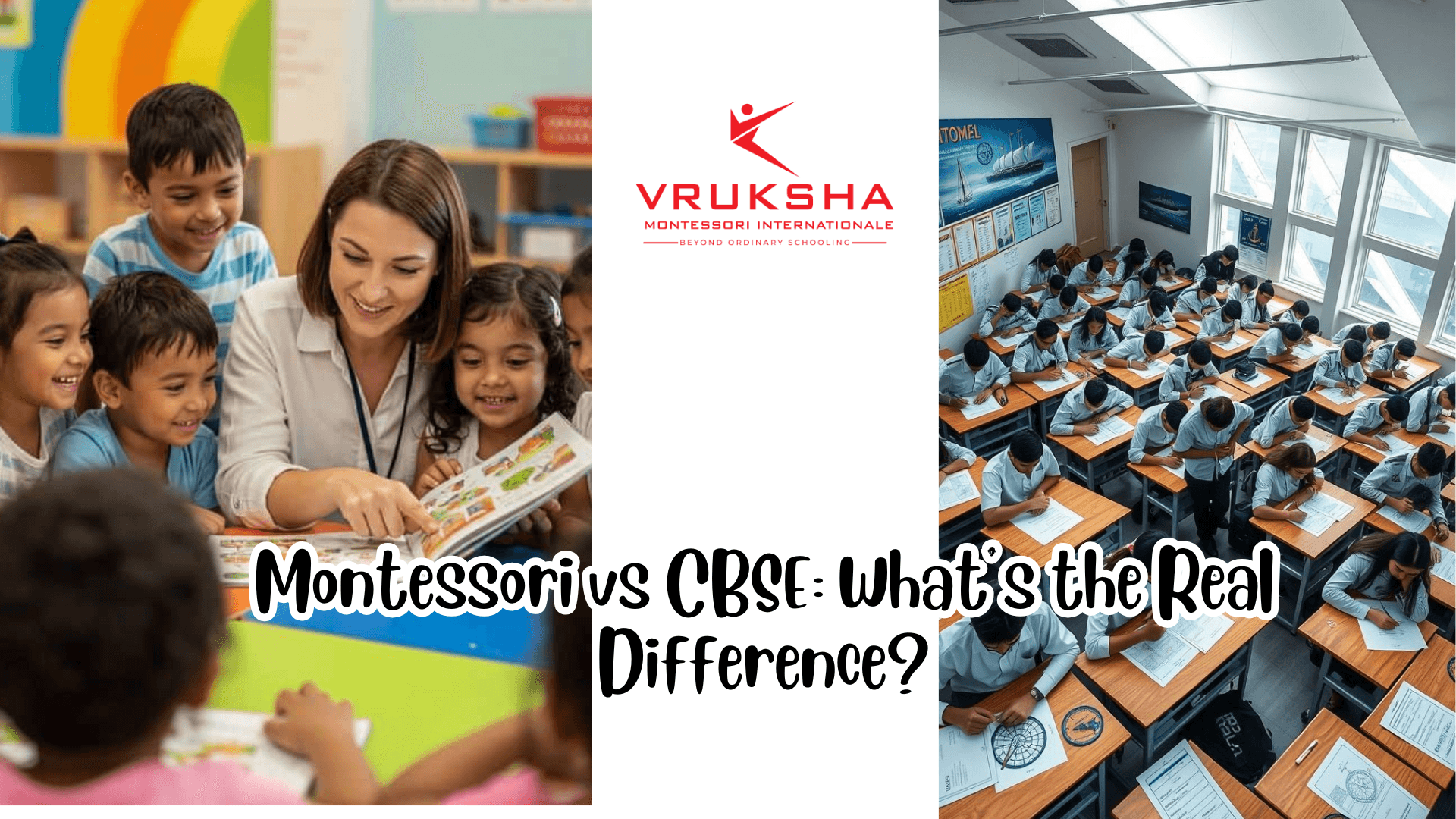
If you’re comparing Montessori and CBSE, you’re already ahead of most parents.
But here’s the uncomfortable truth:
Most parents aren’t choosing the “best system.”
They’re choosing the most familiar one.
And familiarity is not the same as effectiveness.
So before you decide, let’s strip this down to what actually matters.
The Real Origin of CBSE (And Why It Still Matters Today)
The modern schooling system, including CBSE, is not designed for how children naturally learn.
It is built on an old factory model of education created to produce:
Obedient workers
Standardized outputs
People who follow instructions, not question them
Same age. Same syllabus. Same speed. Same exams.
That made sense in an industrial era.
It doesn’t make sense in a world where:
Creativity matters more than memory
Problem-solving beats rote learning
Confidence decides opportunities
CBSE has evolved, yes. But the core structure hasn’t changed much.
What Montessori Actually Does Differently
Montessori is not “alternative.”
It is simply aligned with how children naturally develop.
Instead of forcing children into a system, it builds a system around the child.
That’s the fundamental difference most people miss.
Montessori vs CBSE: The Difference That Actually Impacts Your Child
1. Who Controls Learning?
CBSE:
The system decides what, when, and how a child learns.
Montessori:
The child’s readiness decides the pace and depth.
Result:
One creates dependency on instruction.
The other builds self-driven learners.
2. How Concepts Are Understood
CBSE:
Mostly through textbooks, repetition, and memorization.
Montessori:
Through hands-on materials and real-world application.
Result:
One prepares for exams.
The other builds actual understanding.
3. Speed vs Depth
CBSE:
“Finish the syllabus.”
Montessori:
“Master the concept.”
Result:
In CBSE, children often move ahead with gaps.
In Montessori, they move ahead with clarity.
4. Pressure vs Readiness
CBSE:
Early writing, homework, testing.
Montessori:
Skills are introduced when the child is developmentally ready.
Result:
One creates early pressure.
The other builds natural confidence.
5. What Skills Are Actually Built
CBSE builds:
Discipline
Exam performance
Syllabus coverage
Montessori builds:
Independence
Decision-making
Problem-solving
Communication
Now ask yourself honestly:
Which of these will matter more 15 years from now?
“But Will My Child Fall Behind?” — Let’s Address the Real Fear
This is the biggest concern parents have.
And it’s valid.
But here’s what actually happens in reality:
Children from a strong Montessori foundation don’t struggle when they move into structured systems.
They adjust faster.
Why?
Because:
They understand concepts deeply
They are not dependent on spoon-feeding
They are confident enough to adapt
In fact, many parents are surprised to realize:
The CBSE syllabus often feels easier for them after Montessori.
Real Examples from Our Classrooms
This is where most schools stay vague. Let’s not.
A child who wouldn’t speak in class is now confidently talking to strangers and giving public speeches.
A child labelled “slow” is now writing stories and building practical solutions like a sensor-based watering system.
Children begin reading and writing simple stories (English or Tamil) by around age 7, often with the right environment.
This is not “extraordinary talent.”
This is what happens when the system stops holding the child back.
The Misconceptions Parents Need to Drop
Let’s be direct.
“No homework means no learning.”
→ Wrong. It means learning is happening in the right place, at the right time.
“Writing early = intelligence.”
→ Wrong. It often leads to mechanical learning without understanding.
“More pressure = better results.”
→ Short-term, maybe. Long-term, it kills curiosity.
Where CBSE Still Makes Sense
Let’s not pretend CBSE has no value.
It works well when:
You want a structured academic pathway
You are preparing for competitive exams later
Your child thrives in routine and instruction
But here’s the smarter approach most informed parents are now taking:
The Smarter Path: Build First, Structure Later
Start with Montessori.
Then transition into structured systems if needed.
Why?
Because:
Foundation years decide thinking ability
Later years can always adjust to structure
The reverse is much harder.
You can’t “fix” lack of curiosity at 15.
Why Parents Choose Vruksha Montessori Internationale
Let’s make this clear.
Not all Montessori schools are the same.
At Vruksha:
Low student-teacher ratio ensures real attention, not supervision
Learning is personalized, not mass-delivered
Admissions are based on parent alignment, not just seat availability
This is not designed for everyone.
It is designed for parents who are willing to think beyond the default system.
Final Thought
This is not about Montessori vs CBSE.
This is about one simple question:
Do you want your child to fit into a system,
or do you want a system that helps your child grow fully?
Most parents don’t ask this.
The ones who do, choose differently.
Visit and See for Yourself
You can read all of this and still remain unsure.
That’s normal.
The only way to understand the difference is to see it in action.
Visit Vruksha Montessori Internationale and observe a classroom.
Then decide.