
Top 10 Questions Parents Ask About Montessori Education
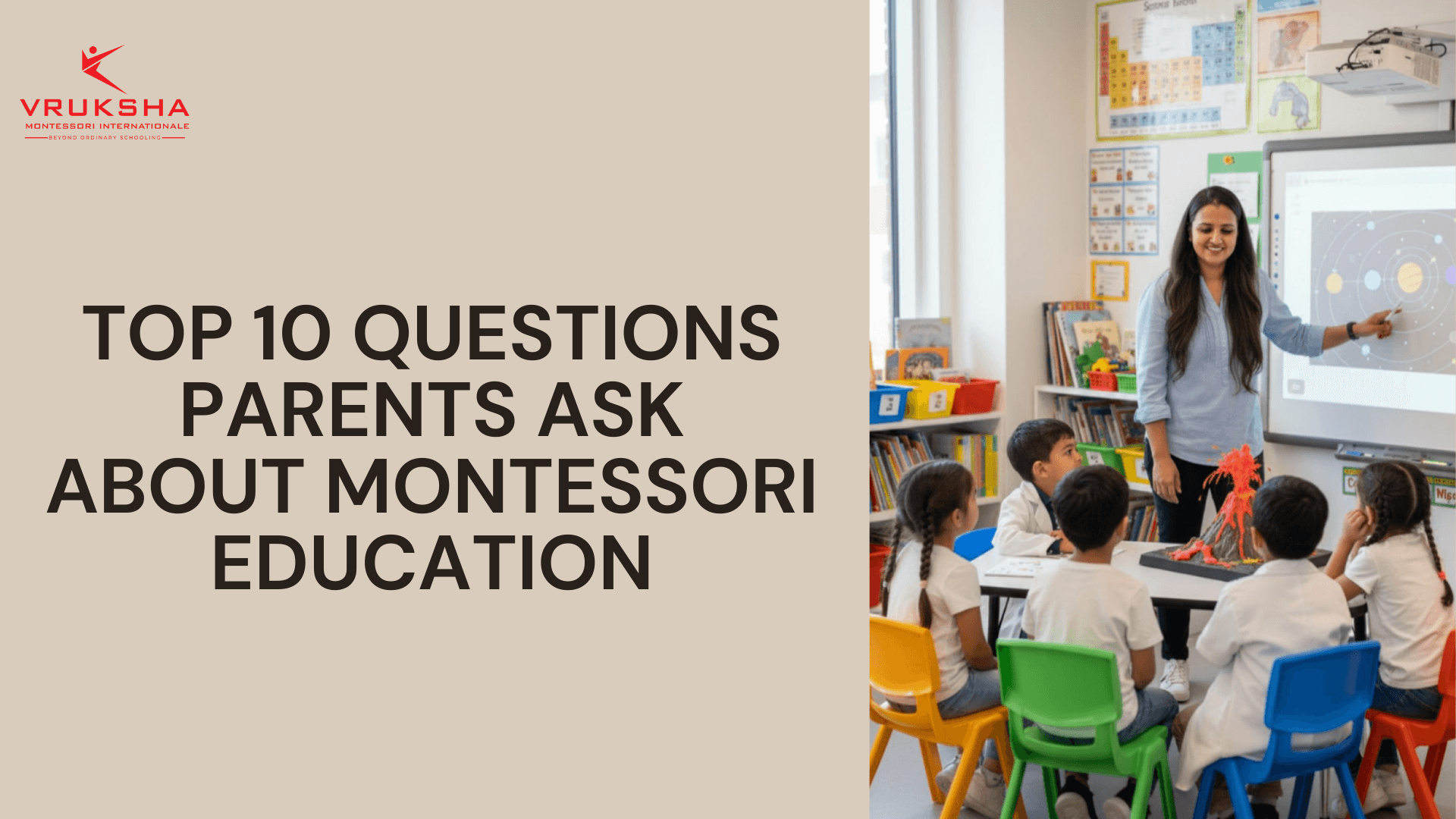
Choosing the right school for your child is one of the most important decisions parents make. Many parents today are exploring Montessori education because of its unique approach to learning and child development.
However, before enrolling their child, parents often have several questions about how Montessori education works and whether it is the right fit for their child. At Vruksha Montessori Internationale School, we frequently interact with parents who want to understand the philosophy behind Montessori learning.
Here are the top 10 questions parents ask about Montessori education and the answers that can help you make an informed decision.
1. What Is Montessori Education?
Montessori education is a child-centered learning approach developed by Maria Montessori. Instead of traditional teacher-led classrooms, Montessori focuses on hands-on learning, independence, and exploration.
Children are encouraged to learn through activities that stimulate curiosity and creativity. Montessori classrooms are carefully prepared environments where children can explore materials and concepts at their own pace.
2. How Is Montessori Different From Traditional Schools?
The main difference lies in how children learn.
In traditional classrooms, teachers lead lessons while students follow instructions. In Montessori classrooms, teachers act as guides while children actively participate in choosing their learning activities.
This approach allows children to develop independence, confidence, and a genuine love for learning.
3. What Age Groups Does Montessori Education Cover?
Montessori education typically supports children from early childhood through adolescence.
The most common programs include:
● Toddler programs (1.5–3 years)
● Primary programs (3–6 years)
● Elementary programs (6–12 years)
● Adolescence program (13-18 years)
Each stage is designed according to the developmental needs of children during that age group.
4. Do Montessori Students Follow a Curriculum?
Yes. Montessori schools follow a structured curriculum that includes the following:
● Language development
● Mathematics
● Practical life activities
● Botany & Zoology
● Matter & Astronomy
● Physical Geography & Cultural Geography
● History
● Environmental care
However, children are allowed to explore these subjects through hands-on materials and guided discovery rather than memorization.
5. How Does Montessori Encourage Independence?
One of the core principles of Montessori education is independence.
Children are encouraged to perform everyday activities, such as organizing their work materials, cleaning their workspaces, and making choices about their learning tasks. This helps build self-confidence and responsibility from an early age.
6. What Does a Montessori Classroom Look like?
A Montessori classroom is known as a prepared environment.
Instead of desks in rows, you will see:
● Learning materials placed on open shelves
● Activity stations for different subjects
● Mixed-age groups of children
● Calm and organized spaces for focused learning
This environment encourages exploration and collaboration among children.
7. How Are Montessori Teachers Different?
Montessori teachers are often called guides rather than instructors.
Their role is to:
● Observe each child’s interests
● Introduce new learning materials
● Encourage curiosity and discovery
● Support emotional and social development
Teachers guide children without interrupting their natural learning process.
8. Do Montessori students develop social skills?
Yes. Montessori classrooms often include mixed-age groups, where younger children learn from older ones while older children develop leadership skills.
This environment promotes empathy, collaboration, and respect for others.
9. Will Montessori Prepare My Child for the Future?
Montessori education focuses on developing life skills, not just academic knowledge.
Children learn important qualities such as the following:
● Critical thinking
● Problem-solving
● Creativity
● Confidence
● Communication
These skills help children succeed not only in school but also in life.
10. Why Do Many Parents Choose Montessori Education?
Parents often choose Montessori education because it nurtures the whole child academically, emotionally, and socially.
Children in Montessori environments develop a love for learning, become independent thinkers, and build the confidence needed to face real-world challenges.
Final Thoughts
Montessori education offers a unique and effective way of learning that respects each child’s individuality and natural curiosity.
At Vruksha Montessori Internationale School, the focus is on creating an environment where children feel safe, inspired, and motivated to explore the world around them.
If you are considering Montessori education for your child, understanding these common questions can help you see why this approach continues to inspire families around the world.