Choosing the Right School for Your Child: Montessori vs Traditional
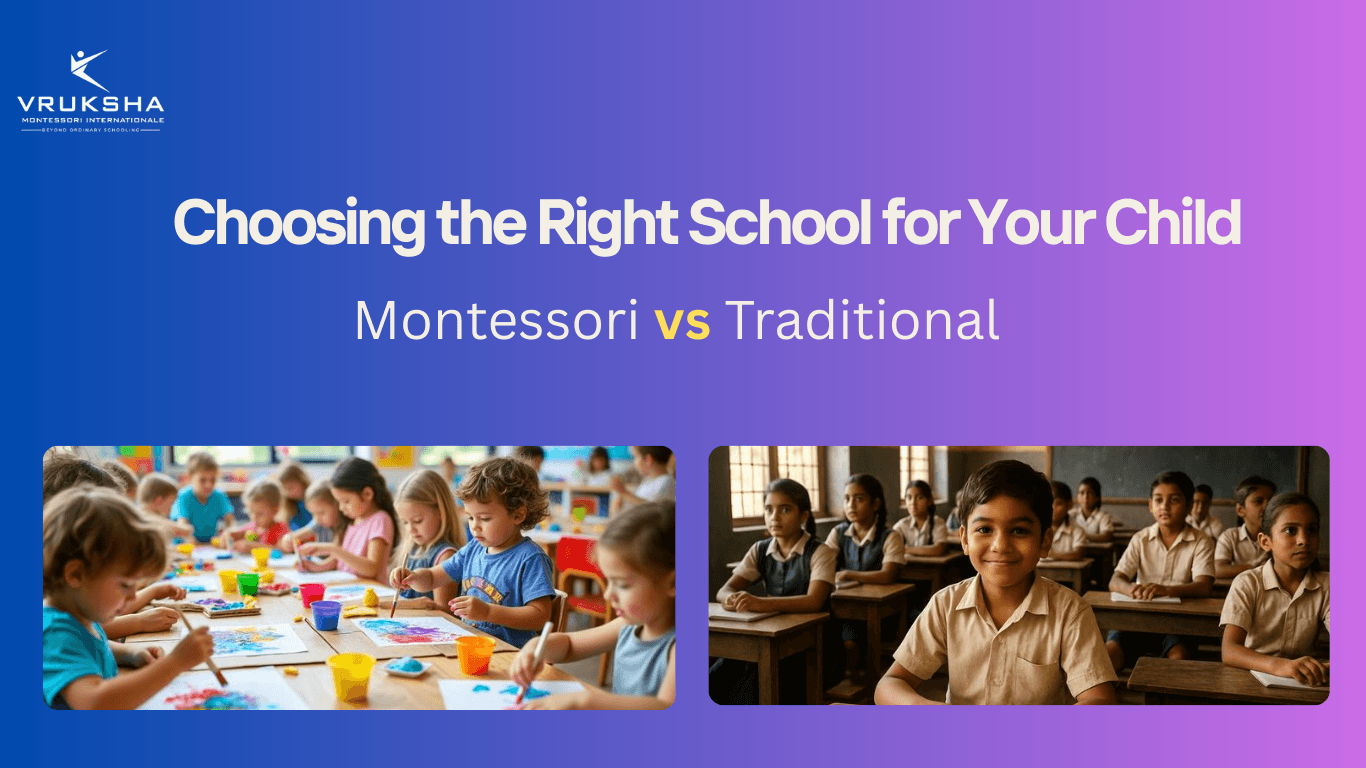
Choosing the right school for your child is one of the most important decisions a parent can make. It’s not just about academic excellence; it’s about finding an environment where your child can grow, explore, and develop into a confident and curious individual. Two of the most discussed approaches in education today are Montessori schools and traditional schools. Understanding their differences can help you make an informed decision that suits your child’s needs and personality.
Understanding Montessori Education
Montessori education is based on the philosophy of Dr. Maria Montessori, who believed that children learn best when they are allowed to explore, discover, and learn at their own pace. In Montessori classrooms, children are encouraged to take the lead in their learning. They have the freedom to choose activities that interest them, work independently or in small groups, and move around the classroom freely.
Key principles of Montessori education include:
Child-Centered Learning: Every child is unique, and the curriculum adapts to their individual learning style.
Hands-On Learning: Montessori classrooms use specially designed materials to make abstract concepts tangible.
Mixed-Age Classrooms: Younger children learn from older peers, while older children reinforce their understanding by teaching others.
Self-Discipline and Independence: Children learn to manage their time, make choices, and develop problem-solving skills.
Montessori education focuses on the overall development of a child—intellectual, emotional, social, and physical rather than solely on academics.
Understanding Traditional Education
Traditional schools, on the other hand, often follow a more structured and teacher-led approach. The curriculum is designed for a fixed age group, and students follow a set timetable with specific subjects taught at specific times. Assessment is usually based on exams, grades, and standardized tests.
Key features of traditional education include:
Structured Curriculum: A fixed syllabus ensures uniformity in learning across students.
Teacher-Led Instruction: The teacher plays the central role in delivering knowledge.
Age-Based Classrooms: Students of the same age learn together, which allows for targeted teaching.
Regular Assessments: Exams and tests help track academic progress and performance.
Traditional schools are often preferred by parents who value a clear, structured system with measurable outcomes and proven academic standards.
Comparing Montessori and Traditional Approaches
When choosing between Montessori and traditional education, it’s essential to consider how each approach aligns with your child’s personality, learning style, and long-term growth.
1. Learning Pace:
Montessori: Children learn at their own pace, allowing them to fully understand concepts before moving on.
Traditional: Students follow a set pace, which may pressure slower learners or bore advanced students.
2. Role of the Teacher:
Montessori: Teachers act as guides, observing and facilitating learning rather than instructing constantly.
Traditional: Teachers lead lessons, often dictating what and how students should learn.
3. Classroom Environment:
Montessori: Classrooms are designed for exploration with hands-on materials and freedom to move.
Traditional: Classrooms are structured with desks in rows, emphasizing order and discipline.
4. Assessment:
Montessori: Assessment is continuous, qualitative, and focuses on overall development.
Traditional: Assessment is formal, quantitative, and exam-focused.
5. Social Development:
Montessori: Mixed-age groups promote peer learning, empathy, and leadership skills.
Traditional: Social interactions are mainly within the same age group, with limited leadership opportunities.
Benefits of Montessori Education
Independence and Self-Discipline: Children learn to manage themselves, make choices, and take responsibility.
Encourages Curiosity: Freedom to choose activities sparks natural curiosity and lifelong learning habits.
Focus on Individual Strengths: Each child’s talents and interests are nurtured.
Hands-On Learning: Practical experiences help children grasp abstract concepts easily.
Holistic Development: Emotional, social, and cognitive growth are given equal importance.
Benefits of Traditional Education
Structured Learning: Ensures comprehensive coverage of essential subjects and knowledge.
Academic Performance: Exam-focused approach can result in measurable success in standardized tests.
Discipline and Routine: Helps children adapt to rules, schedules, and societal norms.
Extracurricular Opportunities: Many schools offer sports, arts, and other structured activities.
Preparation for Higher Education: Traditional methods often align closely with higher education systems.
Factors to Consider When Choosing the Right School
Your Child’s Learning Style: Is your child self-motivated, curious, and independent, or do they prefer structured guidance?
Values and Philosophy: Consider what aligns with your family values—freedom and exploration or structured discipline and exams.
Teacher-Student Ratio: Smaller class sizes in Montessori schools can allow more personalized attention.
Curriculum Flexibility: Check if the school adapts to your child’s pace and interests.
Environment and Facilities: Observe the classroom setup, learning materials, outdoor spaces, and extracurricular options.
Parent Involvement: Montessori schools often encourage active parent engagement in the child’s learning journey.
Making the Decision
Both Montessori and traditional schools have their advantages. The best choice depends on your child’s personality, learning style, and your educational goals as a parent. Some children thrive in a structured, exam-oriented environment, while others flourish in a self-directed, exploratory setting.
Visiting schools, interacting with teachers, and observing classrooms in action can provide valuable insights. Ask questions about teaching philosophy, classroom management, assessment methods, and opportunities for social and emotional growth.
At the end of the day, the ideal school is one where your child feels safe, motivated, and supported an environment that nurtures their potential, encourages curiosity, and prepares them for the challenges of life ahead.
Conclusion
Choosing the right school is not just about academics; it’s about shaping your child’s character, confidence, and love for learning. Montessori and traditional schools offer distinct approaches, each with unique benefits. By understanding the differences and considering your child’s needs, you can make a decision that sets them on the path to a successful and fulfilling educational journey.
For parents interested in a child-centered, curiosity-driven learning experience, Montessori education, such as that offered by VMIS Schools, provides a nurturing environment where children thrive academically, socially, and emotionally.